


According to experts, 50% of sales representatives stop after just one follow-up. However, for closing deals, you need to put continuous efforts like persistence and follow-ups. Here, sales techniques come into play that make a difference. These are strategies that help professionals attract prospects, understand needs, handle objections, and guide them. If you are new to sales, mastering these techniques helps you connect with customers. In this guide, you will learn about the Sales Techniques in detail.
What is Sales Technique?
Sales technique refers to the method or strategy that sales professionals use to attract potential customers, offer value, address objections, and persuade them to make a purchase.
Main Sales Techniques
These are techniques that you should apply in the sales process:
Active Listening
It involves paying full attention to the customer’s words, tone, and emotions. Most people want to feel heard. When customers sense genuine understanding, they are more likely to trust and share true concerns.
How to apply this technique?
- Ask open-ended questions.
- Paraphrase what the customer says.
- Avoid Interrupting.
Consultative Selling
Act as an advisor who can solve your problems. Don’t pressure the customer to purchase. Customers like to buy when they see you care more about their needs, not sales targets.
How to apply it:
- Research the customer before the conversation.
- Ask about their pain points.
- Suggest the right solutions.
Sign up and get 20 credits for free!
We have 3 million+ contacts stored to connect you with prospects all over India
Storytelling in Sales
You should use real-life examples and customer success stories to explain how your product solves a problem. Stories connect emotions and make information memorable, and help customers visualize.
How to Apply it?
- Share a story of a client with similar challenges.
- Show the before (struggles) and after (results).
- Keep it short and relevant.
Social Proof
You should use testimonials, case studies, or client logos to show others to trust your product. Humans rely on others’ experiences to make decisions. Today’s customers make decisions over customer reviews and testimonials.
How to apply it?
- Share reviews during a pitch.
- Mention the number of satisfied customers.
- Use industry-specific case studies.
SPIN Selling
This technique involves asking questions: Stages, Situation, Problem, Implication, and Need Payoff. It helps in finding real customer needs and positions your product as the logical solution.
How to apply it:
- Situation: Tell me about your current process.
- Problem: What Challenges are you facing?
- Implication: What happens if this continues?
- Need Payoff: How would solving this help your business?
Objection Handling
In this technique, the salesperson solves the doubts (like price, timing, trust) in a positive, professional way. Most customers are not going to say yes.
How to apply it:
- Carefully listen to your customer without interrupting.
- Acknowledge their concern (I understand price is important)
- Convert the objection into a benefit.
Closing with Confidence
Guide customers to make a decision using subtle, ethical closing strategies. Many deals are lost because the salesperson doesn’t ask for the sale. A sales representative should be confident enough to make it easy for the customer to say yes.
How to apply it:
- Use an assumptive close: Shall we start with the standard package or the premium one?
- Offer options instead of yes/no choices.
- Summarise the value before asking.
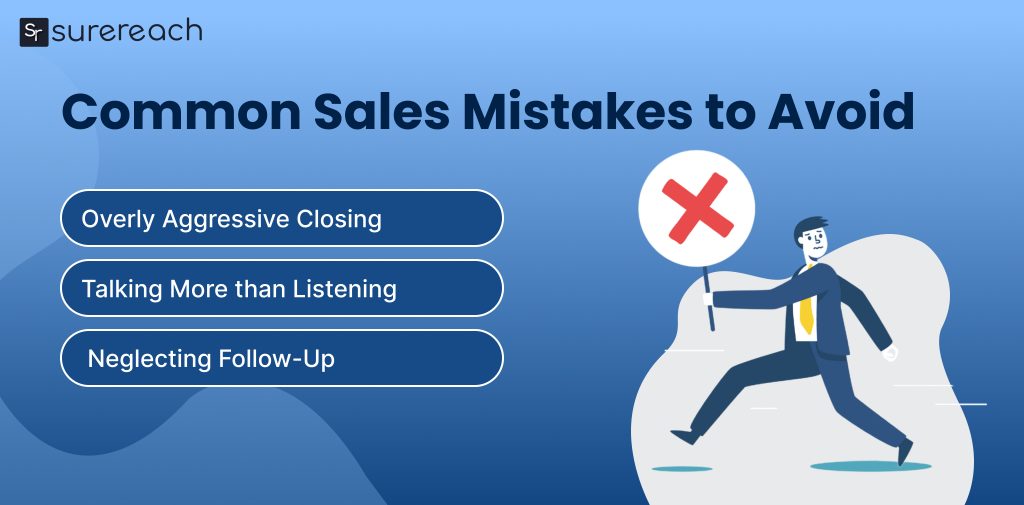
Common Sales Mistakes to Avoid
Even a skilled professional can apply sales techniques in the wrong way. You must know about these things:
- Overly Aggressive Closing
Don’t push too much pressure on prospects to make quick decisions. You should guide them through a logical decision-making process.
- Talking More than Listening
Effective sales conversations are built on understanding client needs. When salespeople dominate the conversations, they fail to offer the right solution. Active listening is required.
- Neglecting Follow-Up
Follow-up is the most essential part of the sales process. Consistent, timely, and personalized follow-ups show professionalism.
Conclusion
Mastering sales techniques is not about using tricks to close deals. It’s about building trust, solving problems, and creating value for your customers. Each technique includes listening, storytelling, SPIN selling, or handling objections with confidence. Each technique helps you move closer to genuine connections and long-term relationships.
Remember, sales success is not an easy process. It requires patience, consistent follow-ups, and the right approach according to the customer. Avoid mistakes like pressuring customers, talking more than listening, or skipping follow-ups. Focus on customer needs and offering the right solutions. You should also use sales automation tools to get more time for sales.
FAQs
What are the 7 Sales Techniques?
The key seven sales techniques:
- Prospecting
- Preparation
- Approach
- Presentation
- Handling
- Objections
- Closing
- Follow-Ups
What are the 7 C’s in Sales?
The 7 C’s in sales include clear, concise, correct, coherent, complete, and courageous communication.
What are the most effective sales techniques for beginners?
The most important effective sales techniques are active listening, consultative selling, storytelling, and follow-ups.
How important is follow-up in sales?
Follow-up is the most crucial part of the sales technique that brings conversion.
What is Sales Technique?
It is a set of strategies that salespeople can use to approach potential customers.



Ashish Kesharwani
Digital Marketer at Surereach, specializing in creating compelling content and executing effective digital strategies.
More posts by Ashish Kesharwani