

For sales and marketing, high-quality data is essential. It helps communicate with the right person and conversions. However, inaccurate and outdated stakeholder information wastes the sales team’s resources and time. However, many businesses deal with data quality issues. Here, in this blog, you will learn about common data quality issues and how you can fix them.
What is data Quality and why is it critical?
Data quality refers to the accuracy, completeness, and reliability of your data. High-quality data ensures that the contact details are correct, up to date, and relevant. It is usually evaluated across six key dimensions, including accuracy, completeness, consistency, timeliness, validity, and uniqueness.
Common Data Quality Issues
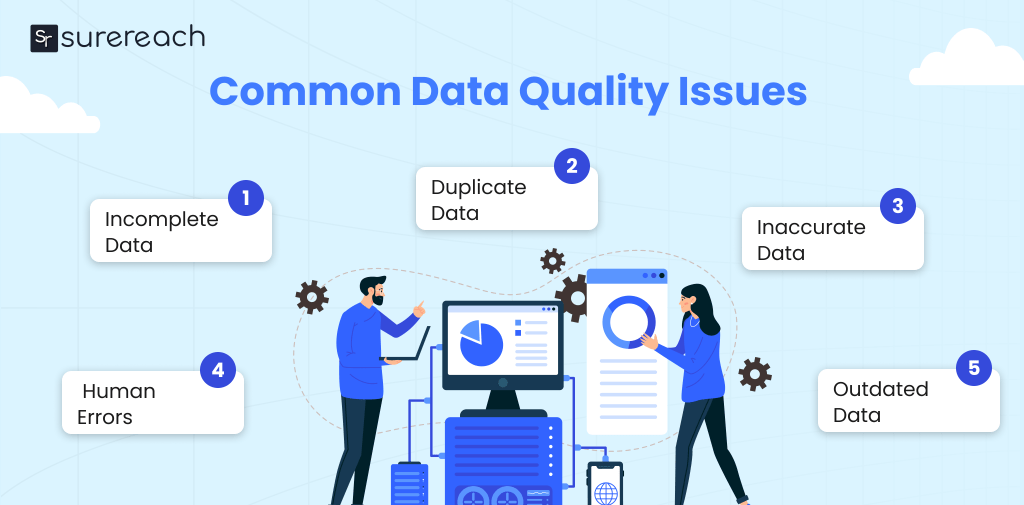
These are the most common issues businesses face in data quality:
- Inaccurate Data: It happens when the lead data stored is inaccurate due to human errors, typos, or system glitches. For example, an incorrect email address or a misspelled customer name can disrupt communication; you should also focus on data enrichment.
- Duplicate Data: Duplicate entries can occur when the same record exists multiple times in the database. It often happens when customer information is collected from different sources without proper checks.
- Incomplete Data: Some data lists with missing information, like an address without a postal code or a customer record without contact details.
- Outdated Data: Outdated data is another issue, like old phone numbers, closed business addresses, or an employee who has left the company. Calling on outdated data gives no results.
- Human Errors: Human error is the most common issue. It depends on the human input, so when this fails. It commonly occurs due to data entry issues.
How to Identify Data Quality Issues?
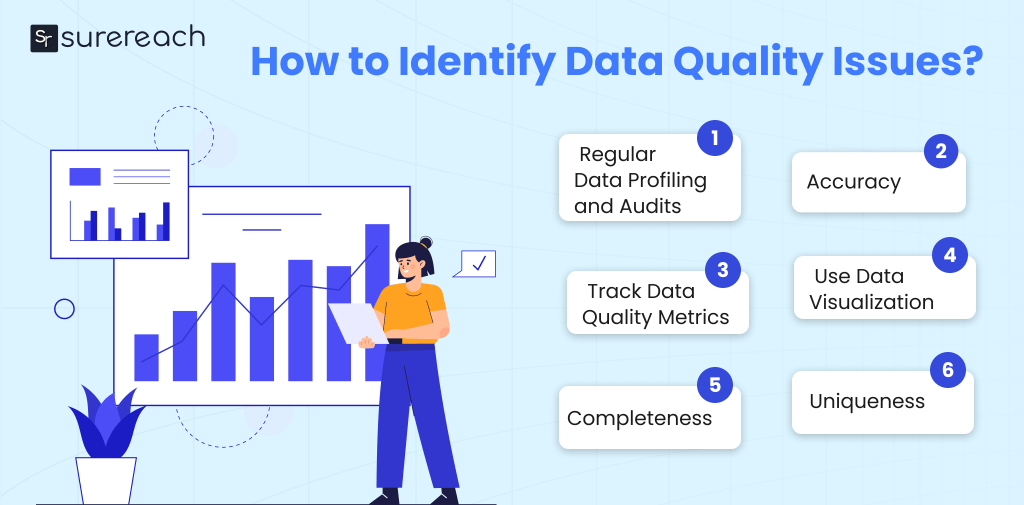
Finding and fixing data quality issues is essential for the sales and marketing team. Here is how you can find data quality issues.
- Regular Data Profiling and Audits
Conduct monthly or quarterly audits to check datasets. The data profiling tools can uncover duplicates, anomalies, and information gaps.
- Track Data Quality Metrics
You should measure data against key quality KPIs (Key Performance Indicators) such as:
-
- Accuracy – Is the data correct?
- Completeness – Are required fields filled?
- Timeliness – Is the data up to date?
- Uniqueness – Are there duplicate records?
- Use Data Visualization
Use visualization tools to easily detect irregular patterns, sudden spikes, or missing values. Visual dashboards simplify the process of spotting issues at scale.
- Gather Feedback and Monitor Errors
Find signs of bad data through customer feedback, email bounce rates, or operational delays. It indicates points of inaccuracies or outdated records.
Sign up and get 20 credits for free!
We have 3 million+ contacts stored to connect you with prospects all over India
Why is Bad B2B Data a Problem?
Bad B2B data leads to many issues:
- Wasted Time
Sales representatives waste hours chasing inaccurate information. Many businesses struggle with this inefficiency.
- Misdirected Marketing Campaign
Wrong or outdated contact details lead to wasted ad spend and lower conversion rates. It will give no return even after spending money.
- Bad Leads
Wrong or incomplete contact details prevent repetitions from reaching prospects. It wastes lead generation and marketing efforts.
- Results in Undelivered Emails
An incorrect email address affects email campaign effectiveness. It can also harm the domain’s reputation with ISPs.
- Creates Compliance Risks
Bad data can lead to violations of consumer protection and industry regulations. It can result in fines.
- Damaged Brand Reputation
Mistakes like using the wrong names or outdated information frustrate customers and reduce trust. It makes it harder to retain or attract new clients.
Action Plan to Solve Data Issues
You can solve data issues through:
- Audit Your Current Lead Data: Thoroughly check the dataset’s accuracy. It helps in checking the accuracy, completeness, and consistency.
- Identity Key Qualities Gaps: Detect and document duplicates, outdated records, missing fields, and inconsistencies. You can verify phone numbers and email IDs through the Surereach phone number and email verifier.
- Deploy Validation, Governance, and Orchestration: Use automated tools to ensure that data integrity is maintained across all systems.
- Automate Enrichment and Cleanup: Use data tools and platforms to continuously correct errors, standardize formats, and merge duplicate entities efficiently.
- Measure, Train, and Refine: Check data quality on a regular basis. You should provide training to the team.
Conclusion
Poor data quality is very risky for business. It contains inaccurate, incomplete, or inconsistent data, which can lead to wrong decisions, revenue loss, reduced customer trust, and inefficiencies across teams. On the other hand, investing in data quality management serves measurable ROI, better decision-making, improved operational efficiency, and stronger customer relationships.
FAQs
What are data quality issues?
Data quality issues are problems like inaccurate, incomplete, duplicate, or inconsistent data.
What are the best practices to maintain data quality?
- Regular audits and profiling.
- Data verification.
- Standardized data formats.
What are the signs that my database has poor data quality?
High email bounce rates, undelivered campaigns, duplicate contacts, and inconsistent formats are signs of a database.
How does data poor quality impact sales and marketing?
It leads to waste resources, failed campaigns, inaccurate targeting, and compliance risk.
How to find data quality issues?
You can find data quality issues through regular audits, data profiling, and using tools.



Ashish Kesharwani
Digital Marketer at Surereach, specializing in creating compelling content and executing effective digital strategies.
More posts by Ashish Kesharwani