

When you are in the world of a B2B company, identifying your ideal client isn’t simple. If you truly desire to build relationships, convert and maintain your customer base, it is essential to establish an accurate B2B customer profile. The profile is constructed on authentic information and data. If you are planning to launch an entirely new campaign, improve the sales process, or modify it. Find out who your client is. In this article, you will be taught about profiling your customers, what it’s about, as well as how to construct an appropriate B2B profile for your customers.
What is a Customer Profile?
Customer Profiling is an elaborate document that outlines the characteristics of an ideal customer based on data from real customers. It contains the demographic, filmographic, behavioral, and psychographic data. Simply put, it describes who your potential customers are, the things they require, as well as how they act.
What is a B2B Customer Profile?
A B2B customer profile is the complete description of a firm or company that represents your ideal customers. The profile includes details of a firm’s structure, including business size, the industry it operates in, its revenue level, and geographical area. The profiling process enables sales managers to identify high-potential leads and allows marketers to design targeted marketing strategies.
Sign up and get 20 credits for free!
We have 3 million+ contacts stored to connect you with prospects all over India
How to Create a Targeted B2B Customer Profile – Step-by-Step
These are the essential steps you should take for creating a Targeted B2B Customer Profile:
- Define Your Objective: Start identifying what you want to achieve with the customer profile. It better lead generation, improved targeting, product development, or sales alignment.
- Analyze Your Best Existing Customers: Check your customer base to identify those with the highest lifetime value, and streamline onboarding.
- Identity Key Decision Makers: Know who is involved in the buying process – decision makers, influencers, and users. It includes their job titles, departments, and concerns.
- Understand Pain Points and Needs: You need to understand the challenges of the business to provide them with the right solutions.
- Map the Buying Behaviour: Identify how your ideal customers typically discover, evaluate, and purchase a solution.
- Continuously Refine: A B2B customer profile changes with time. Revisit based on new customer data, market shifts, or feedback from internal teams
Benefits of B2B Customer Profiling
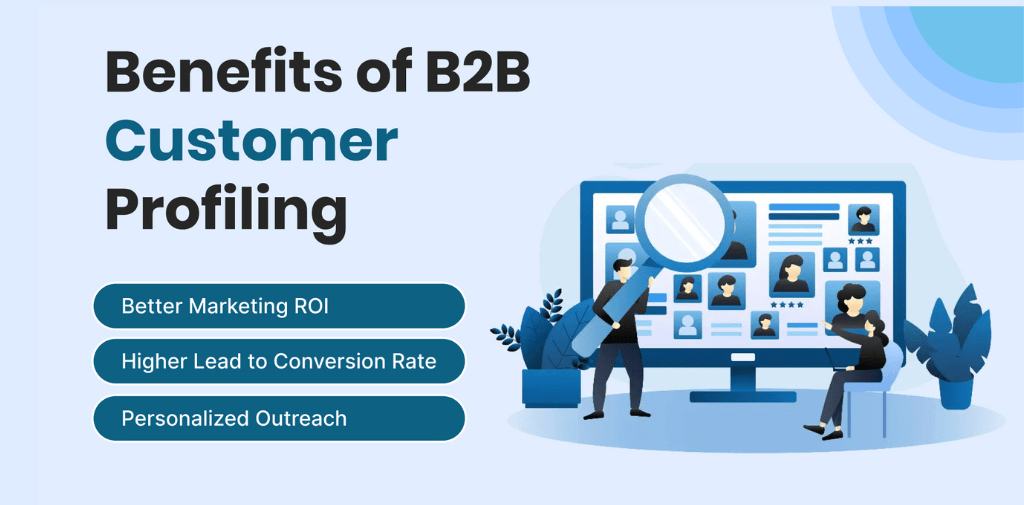
- Better Marketing ROI: Finding the right audience ensures that your marketing efforts reach high-potential businesses. It reduces waste and increases returns.
- Higher Lead to Conversion Rate: When your messaging aligns with the specific needs of ideal customers. It leads to a more likely conversion into paying clients.
- Personalized Outreach: Customer profiles help customize your communications to address industry-specific pain points, roles, and goals.
Customer Profiles Examples
There is no single correct way to create a customer profile. You can design it in a way that best suits your team.
-
Basic Information Profile
This is the most straightforward type of customer profile. It includes simple details such as age, location, and the main problem they face. It works well if your business is simple or if you just need to have a quick overview.
-
Segmented Profiles
Instead of creating just one profile for all your customers, you group them into different types. Each group (segment) gets its own profile. It helps your team understand the needs and pain points of each group.
-
Buyers Personas
It is a made-up version of a real customer. It focuses on thoughts, worries, and what motivates them.
-
Sales-Focussed Ideal Customer Profile
It is a profile made according to the sales team. It explains the kind of customer who is the best match for your product or service. You can turn it into a scoring system where salespeople give points based on how well a customer fits.
Tools for Building Customer Profiling
- CRM Platforms: CRM Platforms like HubSpot and Salesforce help in storing and managing customer information. You can track interactions and understand customer information.
- Analytics Tools: Analytics tools like Google Analytics and Mixpanel will show how customers interact with the website and app.
- Survey & Feedback Tools: Use these to ask your customers questions and gather insights directly from them.
- Business Data and Research Tools: These tools help you find information about companies and professionals, such as company size, industry, job titles, and more. It helps in generating B2B leads easily.
Conclusion
Making a specific B2B customer profile is among the best ways to boost your sales, marketing, and overall customer experience. If you know the type of customer you want to attract, who they are, what they need to do, and the way they act. They can be reached more easily. This helps you to save time, save money, and concentrate on leads with high value.
The goal should be to create your customer’s profile that should be regularly updated to keep your business in check and as markets develop.
FAQs
Q.1 What is a B2B customer profile?
Ans: A B2B customer profile is a description of the type of company.
Q.2 What are the 4 types of B2B customers?
Ans: The 4 types of B2B customers are producers, resellers, governments, and institutions.
Q.3 What are B2B customers?
Ans: It is a business that purchases goods or services from other businesses, rather than from individual consumers.
Q.4 How to create an Ideal Customer Profile?
Ans: Analyze your best existing customer to identify common traits like industry, company size, pain points, and buying behaviour.
Q.5 What is the difference between a customer profile and a buyer persona?
Ans: A customer profile focuses on information like industry, size, and revenue. A buyer persona includes goals, traits, and decision-making behaviour.

Ashish Kesharwani
Digital Marketer at Surereach, specializing in creating compelling content and executing effective digital strategies.
More posts by Ashish Kesharwani